
Tag

when

Browsing

Weight training has many positive effects on the body. With the right diet, you can quickly see changes in your body and muscles. But you should note a few things.

Avoid the 8 biggest mistakes when weight training

#1 Training without a plan

Your training should be structured through. A training plan can help. Because strength training is only about fun, mainly about building muscle. A training plan will help you to train all muscle groups with different, varying exercises.

If you do the exercises from the stomach, they will always be the same ones that are easy for you. In order to achieve results, however, some effort and, above all, variety are required. You can have a training plan drawn up in your gym.

#2 No warm up

Do you shy away from warming up because it’s warm outside anyway or don’t have time? You should change that. With a warm-up, the body pumps more blood through the circulatory system and your muscles, tendons, ligaments and joints are prepared for the effort to come.

This also makes you less prone to injury and more enduring. So use a cardio machine of your choice for eight to ten minutes before every strength training session and cycle, step or run at a moderate pace.

#3 Quantity instead of quality

Only if you pay attention to the technique during training will you also use your target muscles and consequently grow faster. Even if you might be able to lift a few kilos less as a result.

Improper exercise also increases the risk of injury. So always pay attention and ask a trainer if you are unsure.

#4 Wrong training weight

Nobody needs show-offs in the gym. Therefore: only take as much weight as you can really handle and not as much as your neighbor can lift. Excessive training weight can lead to overload or even injuries. Your exercise execution suffers as well.

How do I know my training weight? Legs can move more weight than shoulders. The last reps of a set should be difficult for you. If you can’t do your exercise correctly, the weight is too heavy. If you can move the weight with ease, it’s too light.

#5 No rest between sets

Taking a break between each set is important, even if you feel pressed for time. Because during this break, your muscles fill up their energy stores. This allows you to last longer. But if the breaks are too long, your body cools down again.

#6 No increase in load

Your muscles build up with the training and get used to the strain. So that your progress does not stagnate, you should regularly look for new challenges and set new stimuli.

That doesn’t necessarily mean you need to increase the weights. You can also do more reps per set, switch to free exercises, or add additional exercises.

#7 No cool down

Cool down is the opposite of warm up. They show the body that the stress phase is over and that it can cool down. The heart and breathing rate can be easily regulated during a leisurely ride on the bicycle ergometer or when rolling out on the foam roller.

#8 No recovery period

More is not necessarily more! Give your body a break between workouts to recover. If you train too often, there is not only a higher risk of injury, you also train less effectively and persistently, which in the long run leads to stagnation of your muscle growth.


Whether it’s a lake, swimming pool, river or sea: summertime is bathing time. But even in autumn and winter you can splash around in the indoor pools and thermal baths as you please. Unfortunately, accidents do happen from time to time. That’s why you should know these rules.

Bavarian water rescue service: Everyone should know these bathing rules

Observe warnings, limitations, barriers and buoys!
Do not dive with a damaged eardrum or a cold!
Never jump into unknown or murky waters!
Avoid weirs and whirlpools!
Never bathe alone. Never swim long distances without a boat escort!
In an emergency, call loudly for help in good time!
Note the special dangers on and in the sea!
Stay away from ships and watercraft!
Pay attention to the water temperature!
Never jump into the water when you are hot. Cool off before that!
Don’t bathe on a full stomach!
Don’t go into the water when you’re tired!
Never swim or dive in the area of ​​diving boards!
Refrain from running at the edge of the pool!
Get out of the water immediately if you get cold! Dry yourself well after bathing!
Never push others into the water!
Leave the water in a storm, spray or thunderstorm!
Do not go into the water under the influence of alcohol, medication or drugs!
As a non-swimmer, never use inflatable floats as a swimming aid!
Avoid aquatic plants!

Swimming in summer: This is how you protect yourself

It also makes sense to regularly apply sunscreen (at least SPF 30) to your skin to prevent sunburn. You should also drink enough water so that your body does not become dehydrated and your circulation does not become sluggish.

A head covering, an umbrella or the shade of a tree are also beneficial to protect yourself from the high levels of sunlight.

With this valuable knowledge, you are armed against dangers and nothing stands in the way of you spending a relaxed and sunny day by the water. Preferably without sunburn, accidents and injuries, but with lots of fun and a good mood!

Bike to work, count steps and try to jog as often as you can. The goal: to lose weight. But the personal compulsion to constantly burn calories affects mental health. Apart from weight loss, sport has so many other positive effects.

Weight reduction in sports: That’s why it shouldn’t be the goal

Anyone who constantly puts themselves under pressure when losing weight or associates weight reduction with negative thought patterns such as “I’ll never make it” or “It’s all taking too long” can trigger certain stress reactions that are particularly counterproductive for weight loss success. This is partly due to the stress hormone cortisol, which inhibits fat loss and muscle growth, according to personal trainer Sandra Mennel

Another reason not to just focus on losing weight while exercising is weight gain from muscle building. Anyone who does a lot of sport inevitably builds muscle. Without a doubt, a defined body looks better and slimmer. But many people quickly panic and lose motivation when they see the scale saying anything other than the weight loss they want. However, it is often forgotten that muscle is heavier than fat tissue, which is why the scale shows more than hoped for.

The increase due to water retention corresponds to another problem for beginners. If you haven’t exercised properly for years, your muscles will become sore very quickly. This can even affect weight, since the body stores more water when muscles are sore. It is precisely this water retention that leads to the fact that one or two kilograms more can be welcomed on the scales.

Good arguments for sport that have nothing to do with losing weight

Much more than losing weight, the positive aspects should come to the fore in sport. In most cases, we just feel mentally better after a sports session. This is because physical activity releases endorphins, which in turn have a relaxing effect on both the body and mind. That’s why you can not only switch off with a sports unit, but also reduce stress. But only if you don’t stress about losing weight.

Furthermore, studies such as the joint study by Oregon State University and Bellarmine University have shown that regular exercise significantly improves the quality of sleep. During the study period, 3081 adults between the ages of 18 and 85 were interviewed. Those who exercised at least two and a half hours a week were able to increase the number of light and deep sleep phases.

Finally, regular exercise leads to a generally improved state of health. In various studies, scientists have found that regular exercise helps to minimize the risk of type 2 diabetes, cardiovascular disease and even some types of cancer. In addition, the professor of sports science, Dr. Henning Budde, in a “mega-analysis”, that sport has positive effects on depression and even works as well as drug therapies.

Conclusion: With serenity you can lose weight better

If you really want to lose weight, you should approach the topic calmly and not toil in the gym. Sports beginners in particular should not be unsettled by the imbalance on the scales. Those who are prone to chronic stress can specifically include relaxation phases in their sports units. Nevertheless, you should always expect small setbacks, because failures are completely normal when losing weight and are part of it.

One in four adults does not exercise enough. More than five million deaths could be avoided if the world’s population would exercise more. It doesn’t matter whether it’s jogging, weight training or cycling: Regular exercise not only promotes physical and mental health, but also prevents numerous diseases.

Sport: Positive effects on the body

When you exercise, your blood pressure and insulin levels drop for a few hours after exercise. After a few months, your heart gets used to the new strain during sport and thus lowers blood pressure and heart rate in the long term, even outside of training. This relieves the heart and reduces the risk of many diseases. For example, many people suffer from high blood pressure without even knowing it. This is where exercise and the right diet can help.

Strength training also strengthens the muscles and bones in particular, which in turn prevents fractures, tension or muscle tears. There is also a big plus in the positive effect on our immune system. Furthermore, sport reduces the risk of diabetes and cancer and has a positive effect on the brain, which stabilizes thinking skills.

According to the World Health Organization (WHO), physical activity also promotes metabolic health, musculoskeletal health and the prevention of depression. Sport has an impact not only on physical but also on mental health. Physical activity improves mental well-being, increases quality of life as well as mobility and independence, especially in older people, reduces stress reactions, fears, depression and other forms of dementia.

WHO: This is what happens when you don’t exercise

According to the WHO, physical inactivity has negative consequences. Any movement is better than not moving at all. At six percent, lack of exercise is the fourth largest risk factor for premature mortality, after high blood pressure at thirteen percent, smoking at nine percent and high blood sugar also at six percent. Overweight (obesity) is another major risk factor, accounting for five percent of deaths.

For Europe, the WHO estimates the consequences of lack of exercise at one million deaths every year, which corresponds to ten percent of all deaths. There are also drastic economic costs associated with the negative effects of physical and mental inactivity.

WHO recommendations for physical activity

The WHO recommends at least 150 minutes of physical activity per week for the adult population aged eighteen and over. That’s two and a half hours a week and should definitely be possible. It doesn’t matter whether it’s a workout in the gym, a round of jogging in the forest or a relaxed yoga session with friends, all movement promotes health. Even a long brisk walk improves endurance and keeps you fit.

In addition, muscle-strengthening activities should be incorporated that are not limited to just one area of ​​the body. A mixture of endurance and muscle training is recommended here, in units with a minimum duration of ten minutes each. At best, you spread your sports units over at least twice a week.

From the age of 65, the organization increasingly recommends physical activity that focuses on balance, coordination and muscle strengthening at least three times a week. Children should move for at least an hour a day. Children and teenagers should work up a sweat three days a week to strengthen muscles and bones. Being physically active is crucial to your health and well-being.

Happy without meat: Consciously avoiding meat is becoming more and more popular around the world. But what actually happens to our bodies when we give up meat?

The effects of not eating meat are many. The body reacts in the following way:

Weight loss: Those who do not eat meat lose weight more easily and quickly.
Lowering the risk of cancer: Red meat is suspected of being carcinogenic. The body fat percentage also plays a role here.
Healthier intestinal flora:
Better Body Odor:
A disadvantage:

Because of social prejudice, trauma, or personal events, many women develop a fear or dislike of driving. This article provides useful advice on how to overcome panic driving and debunks the erroneous myth that men are better drivers.

Women driving cars

Prejudices between the sexes are not only to be found in the world of work – but road traffic can also be based on social prejudices against women. These mostly result from the false belief that women are worse drivers than men, as well as from the historical association of the automotive scene with the male gender.

But there are female drivers who have made history. And recently the macho tendency in the automotive world is becoming less and less. However, the social burden is so strong that many women view driving with fear and reservations. That’s why we’re going to offer some advice to give encouragement to those who still feel scared when starting the engine.

6 pieces of advice to get braver behind the wheel

If you could, why shouldn’t you? Here are some recommendations to finally get rid of your fear of driving. Also, note useful tips for saving when buying a car.

1) Practice in free and safe places

In the beginning, it could be helpful if you take a driver you trust in the passenger seat so that he or she can help you find your way and give you security. The further away from the city, you lay your exercise route, the safer you will feel. Gradually you will then be able to face heavier traffic.

2) Take driving lessons

In order to learn to drive or to improve your driving skills, both the experience of the trained driving instructors and their theoretical support is essential. Also, it is mandatory to pass the driving test. You can also find out more about the best way to prepare for the exam on DEKRA.

3) Make friends with GPS

If you know the route and its obstacles from the start, you will be more relaxed. Today, thanks to satellite navigation, it is possible to see the direction of travel, and possible shortcuts, quickly recalculate the route if there is a problem or if you miss the exit, etc.

4) Learn basic mechanics and customize your car by yourself

With every problem that arises, you will feel more confident if you have previously informed yourself about the characteristics of each car part if you know the spare parts, and have bought the tires yourself on the Internet beforehand. At www.reifenleader.de there is an extensive catalog of tires including their technical details. You can also consult your car model’s tire manual and your car’s equipment there. In addition, this knowledge can also be an effective help when selling your car.

5) If you need professional help, don’t hesitate to ask for it

When your fear becomes irrational and limits you in the actions of your everyday life, we speak of a phobia. Driving a car has this and it’s called amaxophobia. This psychological state can be due to many reasons, such as remembering an accident. To overcome them, you need professional help. Sometimes, in a few hours of therapy, you can overcome something that many hours of driving couldn’t achieve. Also, note how to avoid annoying winter blues and reduce stress and anxiety.

6) Gradually increase the distance

Without any pressure, you will be able to conquer new streets and districts. Start with those in your neighborhood and gradually expand your radius.

Women are excellent drivers

Both the number of complaints and penalties, as well as the latest studies from institutions such as the US Department of Transportation, INEGI in Mexico, the Polytechnic Institute of Madrid, and the Center for Experimentation and Traffic Safety (Cesvi) in Argentina, lead us to the same conclusion: Not only can women drive as well or even better than men, they are even more careful.

There are other indicators that give indications of this as well. In the UK, for example, car insurance is cheaper for women. And we already know that insurance companies never lose. It is also important to understand that the circumstances in which women live in different countries around the world are very different. The lifestyle that a German woman leads, for example, determines her social behavior to a greater or lesser extent.

Even though some studies show that men have developed some motor skills by up to 20%, when driving a car it is not just these that are important, but a combination of factors such as concentration and obeying the traffic rules. Factors that are more pronounced in women. Stereotypes and gender differences aside, it’s about overcoming irrational fears, learning and practicing, knowing our own limits, and trusting our abilities.

Useful tips when buying a used car and when buying a cheap car. In the following article, you will find out which tips you can take into account in order to save when buying a car.

If you want to save when buying a car, there are several things to consider. Especially when buying a car, you don’t want to be ripped off. If you follow these tips when buying a car, you have a good chance of acquiring a decent car.

1) Where is the best place to buy?

Newspaper advertisement or Internet: The used car offers are in the special sections of the daily newspapers or on the Internet. One can assume that the Internet platforms that specialize in vehicle trading have a larger selection of offers than a newspaper. You can also find useful car tips for buying a used car on the Internet. The question of whether you should buy the car from a dealer or privately cannot be answered unequivocally.

In the case of a private purchase, the buyer is faced with a number of dangers if he is completely unfamiliar with the car. As a rule, there is no guarantee and there is no possibility of prosecuting the seller for any defects that may exist. The dealer, on the other hand, must give a warranty for the car, although you should also be careful when buying from a dealer. There are enough “black sheep” on the used car market who are considered dubious dealers.

2) Buy a used car instead of a new car

If you decide to buy a used car instead of a new vehicle, you can save a lot of money. This is due to the fact that a new car loses significantly in value after the first trip and is therefore also cheaper. If you then also buy your new used car from a dealer, it may be possible that you also get a guarantee on the car.

3) More ways to save when buying a car

If it is a new vehicle, you can also consider leasing returns. These are often available very cheaply as they are sold at market value. In this context, discounts of up to a maximum of 40 percent can be expected. It should also not be forgotten that such leasing models are often available with a mileage of between around 20,000 and 40,000 kilometers. Here it is worth using the best leasing companies. They usually offer their returns cheaply at various locations at important traffic junctions and on the Internet.

There, the returns accumulate enormously and should preferably be brought “to the man” again quickly. So the price is even lower. Especially in this area, you can sometimes save a lot of money when buying a car. Other options are also daily registrations or annual cars from the dealers, the savings potential is somewhat lower, but the vehicles also have lower mileage.

4) Accident-free or accident car?

Accident-free or an accident car: For a layman, it is usually difficult to tell whether the dream car has already been in an accident or not. This is especially difficult when the car has been professionally repaired. If you don’t know for sure whether the car was in an accident or not, you should be more cautious when you spot the following features on the vehicle:

  • lighter or darker areas on the body (different paint tint)
  • suspicious paint marks in places where paint is not normally found (e.g. rubber seals or strut)
  • Trunk, doors, or bonnet do not close properly
  • weird gaps of different widths on doors or bumpers
  • the car is not running straight.

5) Detect odometer tampering

Discover manipulations on the odometer: Today it is even easier to manipulate the odometer than it used to be, you just have to have certain computer skills. The best way to find evidence of mileage manipulation is to take a closer look at the interior. In a new car, for example with 60,000 kilometers on it, the pedals, seats, or gear knobs are in a neat and new condition. However, if the seats are worn and you can no longer see any grooves or patterns on the pedals, you should refrain from buying them and go to another dealer.

6) Observe the service booklet

The service book provides information on how and if the car was serviced at all. Especially with new cars, it is important that the service booklet is handed over to the buyer. If the original invoices from the service appointments are added, you can buy the car with a clear conscience.

Those on a diet prefer to avoid pasta, bread and potatoes. Carbohydrates are not as bad as they are made out to be. We explain what happens to the body when we completely avoid carbohydrates.

1. Your performance decreases

In addition to fats, carbohydrates are among the most important sources of energy. If you do without carbohydrates, this will primarily be noticeable in your reduced performance. You tire more quickly, are less able to concentrate and generally feel weak and powerless.

2. You damage your digestion

Your digestion is going crazy and you are struggling with constipation? Avoiding carbohydrates may be to blame. Good carbohydrates help to strengthen your intestinal health and promote beneficial intestinal bacteria. The resistant starch in rice, wholemeal pasta or potatoes is particularly important for a good intestinal flora.

3. You lose muscle mass

Without carbohydrates on the menu, muscle mass is a long time coming or disappears again. If the body cannot fall back on carbohydrates, it uses the protein reserves. But these are exactly what you need to build muscle. The hard-earned training results? Completely free!

4. Your mood suffers

It’s not just your performance that suffers when you eat too few carbohydrates. You’re in a much worse mood too. It’s not for nothing that we get “hangry” when we haven’t eaten. Because carbohydrates not only satisfy hunger. It has been proven that they even make you happy. Food high in fat and carbohydrates activates the reward center. And that makes you happy.

Headaches, itching and gastrointestinal discomfort after a meal could be symptoms of histamine intolerance. More and more people are suffering from it, but the causes and a clear diagnostic procedure have not yet been scientifically clarified. How to recognize histamine intolerance and which foods to avoid.

Histamine intolerance: the cause has not yet been finally clarified

The exact cause of histamine intolerance is still being discussed by experts. There is a high probability that a deficiency or reduced activity of the enzyme that breaks down histamine (DAO) is responsible for this. But how do I actually know if I tolerate histamine or not? A red spot on the skin, often accompanied by itching after eating foods containing histamine, is one of the most obvious symptoms. According to the Swiss interest group histamine intolerance (SIGHI), stabbing headaches, abdominal pain and diarrhea can also be signs.

It is also important to know that an intolerance is not the same phenomenon as an allergy. These intolerances cannot be detected in either a blood test or a skin test. It’s a different story with allergies. If there is a suspicion of histamine intolerance, an allergist or a specialist in the field of nutrition should be consulted, who will then carry out detailed examinations.

A histamine intolerance is diagnosed when a person who suspects this intolerance in themselves deliberately avoids histamine in their diet for a period of time. A “dietary provocation” is then carried out for diagnostic purposes. This means that the person in question includes histamine-containing foods in their diet again. The reaction to this provocation then leads to a final diagnosis.

Foods rich in histamine that should be avoided in case of intolerance

What actually contains histamine? In short: all foods that are subject to microbial ripening. These include, above all, mature cheeses such as Emmental or mountain cheese, as well as raw sausages such as salami or raw ham. There is also a lot of histamine in other foods, such as nuts, spinach, fish preparations, sauerkraut, tomatoes or chocolate. But also foods that contribute to increased histamine release in the body. This includes any alcoholic beverages, as these increase the permeability of the gastrointestinal mucosa.

The treatment of histamine intolerance is currently carried out in two ways: On the one hand, the diet of histamine intolerant people should be adjusted accordingly and foods that trigger the symptoms should be avoided. On the other hand, there are so-called antihistamines, in capsule or tablet form, which can alleviate symptoms in acute cases.

In fact, everyone knows that arsenic is poisonous. But did you know that the toxin is also found in rice? In this article you will find out what dangers the substance poses to children.

How does arsenic get into rice?

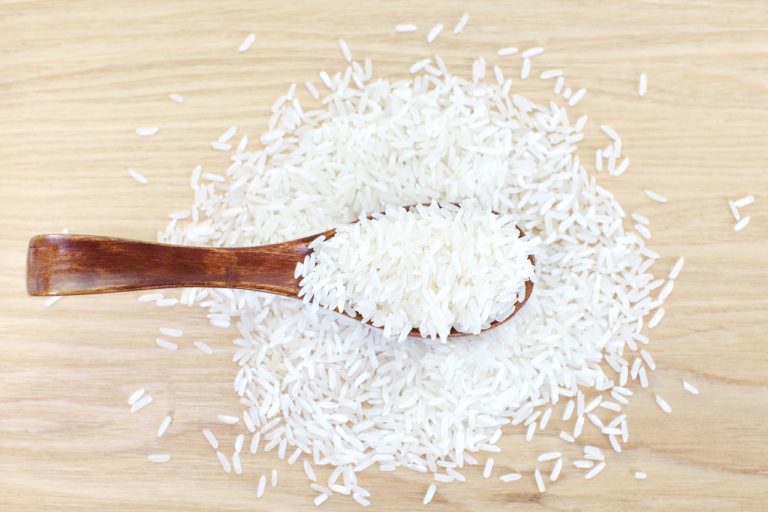
Arsenic is a metalloid that occurs naturally in the ground – more or less often depending on geological conditions. Types of grain, including rice plants, absorb arsenic compounds through their roots. These get into the fruit via the metabolism.

Rice is grown in flooded fields because it thrives best in wet, humid conditions. More arsenic ends up in the rice plants via the water than in other cereals that are cultivated dry.

How much arsenic ends up on the consumer’s plate depends not only on the regional soil conditions, but also on the processing of the rice grains. Because the arsenic settles in particular on the edge of the grains.

How much arsenic does rice contain?

Consumers cannot see how much arsenic the purchased rice contains. According to the BfR, the amount of rice that an adult can eat without causing health problems has not yet been researched.

According to the Federal Institute, the average amounts of arsenic in white rice are between 0.1 and 0.2 milligrams per kilogram. Brown, so-called natural rice, contains more inorganic arsenic because the outer layers are largely removed from white rice. Higher amounts than in white rice were also measured in rice cakes and rice flakes.

Is that why children are not allowed to eat rice?

The BfR assessment, according to which it is not very likely that the consumption of rice leads to health risks, applies to all age groups: adults, the elderly as well as children and infants.

Nevertheless, the BfR recommends parents not to feed their infants and small children exclusively with rice-based drinks or complementary foods such as rice porridge. According to the experts, products such as rice cakes should also vary with snacks without rice.

In addition, the BfR points out that rice-based baby food does not meet the needs of infants anyway due to the unsuitable nutrient composition.

Does washing rice help?

It is difficult to wash out the arsenic compounds from finished products such as rice porridge or rice snacks.

For rice itself, the BfR recommends washing it in plenty of water and boiling it immediately before consumption. In the case of rice with small amounts of arsenic, some of this can migrate into the water.
The cooking water should be poured off immediately after cooking.

Arsenic-free rice coming soon?

In a study published in spring, a Chinese research team, including scientists from the University of Heidelberg, succeeded in finding a travel plant that defies dangerous arsenic.

The researchers exposed over 4,000 rice varieties to arsenic-containing water and observed their growth. Only one of the examined plants with the name “astol1” proved to be tolerant to the toxic metalloid.

The plant develops the amino acid cysteine, which is an important element for the plant’s own development of phytochelatins. These substances have a detoxifying effect and are formed by plants in response to pollutants. The neutralized arsenic is stored in the roots of the plant before it reaches the rice grains and can become dangerous to humans. Scientists consider this plant particularly suitable for agricultural use.